|

The Culture Committee
organizes and oversees activities that
pertain to fostering the
culture of Friuli.

BALARINS
The
Famee Furlane offers classes in traditional Friulian folk
dancing for children, ages 4 to 18.
The 'ballerins' perform at
Famee Furlane functions. They also performed at
weddings, social events and
other community functions.
FURLAN LANGUAGE CLASSES
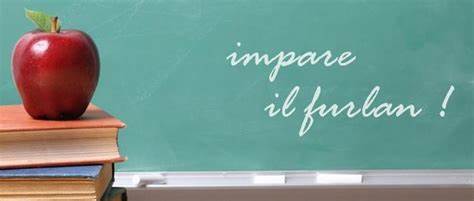
The ‘AMIS DE LENGHE FURLANE’ offers classes
in the Friulian language. Classes are for Beginners and for
Advanced learners. And, there is no charge for the
classes.
For info please contact Famee Furlane.
Together the Coro
Santa Cecillia and Coro
Le Voci del Friuli with the
Conductor.
     
Le
Voci del Friuli
This women's choir is made up
of members of the club's Società Femminile Friulana,
Toronto. They have been performing together since
1995.
Coro Santa CeciliaIn
November, 2011 this renowned choir celebrated its
50th
year of providing beautiful 4-part music.
INDEPENDENCE—April 3
Long long ago on
April 3, 1077, Friuli became an independent region, when
the German Emperor Indri IV gave full autonomy to
Sigjar, the Patriarch of Aquilea. Through the years,
this day became known as Friuli’s National Day.
FAMOUS
FURLANS Amedeo
Giacomini,
noted Italian poet, novelist and translator of medieval
texts as well as a forerunner of 20th century
Friulian poetry, was born in 1940 in Varmo. His
volumes of poetry in Furlan
include Tiare Pesante
(1977) andSfuejs
(1987).
Ardito Desio
1897-2001,
born in Palmanova. Scientist, explorer, who, in 1954
successfully led an expedition to the summit of K2. Saint
Luigi
Scrosoppi,
1804—1884,
Udine
Canonized in
2001 by Pope John Paul II, for his tireless work among
the poor and destitute. He was born into a religious
family (his step-brother was a priest) and joined the
Seminary at age 12. The feast day of St. Luigi
Scrosoppi, like the feast day of many saints, has been
set as the date of his death—April 3rd.
|